-
 [email protected]
-
 +86-17712471297
[email protected]
+86-17712471297

Content
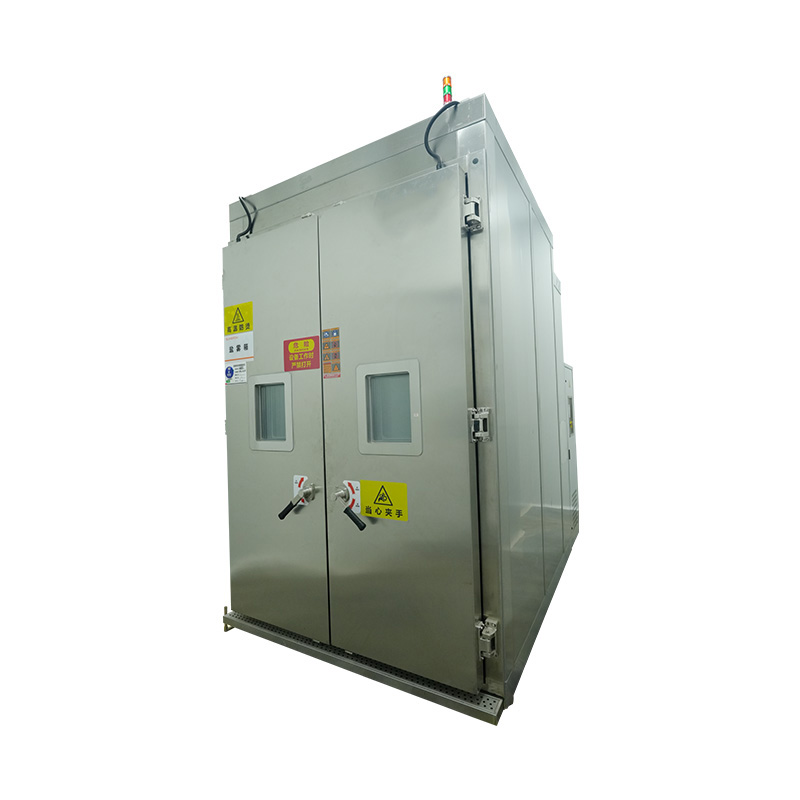
The relentless pursuit of product durability and longevity has made material testing an indispensable phase in the manufacturing and development processes across numerous industries. At the heart of accelerated corrosion testing lies the Salt Mist Corrosion Test Chamber, a sophisticated apparatus designed to simulate harsh environmental conditions within a controlled laboratory setting. These chambers create a corrosive atmosphere by atomizing a saline solution into a fine mist, which settles on test specimens. This process drastically accelerates the corrosion that would naturally occur over months or years in a real-world setting, such as a marine coastline or an industrial area with high pollution. The primary goal is to provide manufacturers, engineers, and quality assurance professionals with reliable, comparative data on the corrosion resistance of materials, protective coatings, and surface treatments. By subjecting products to these extreme conditions, potential failures can be identified and rectified at an early stage, saving significant costs associated with warranty claims, recalls, and brand reputation damage. The data derived from these tests is critical for complying with international standards, guiding research and development, and ultimately, delivering safer and more reliable products to the end-user.
The operation of a salt spray test chamber is a precise and standardized procedure. It begins with the preparation of a saline solution, typically a 5% sodium chloride solution prepared with purified water to avoid contamination. This solution is stored in a reservoir and fed into the chamber's atomization system. A compressed air system, equipped with humidifiers and saturators to warm and moisten the air, then forces this solution through a nozzle, creating a dense, corrosive salt fog. The test specimens are meticulously positioned inside the chamber on non-conductive supports to ensure all surfaces are exposed to the mist. The chamber maintains a constant temperature, usually around 35°C (95°F), to ensure consistent and reproducible test conditions. The exposure duration can range from a few hours to several thousand hours, depending on the material being tested and the specific standard being followed. Throughout the test, the chamber's environment is continuously monitored to ensure the pH, salinity, and temperature remain within the strict parameters defined by standards such as ASTM B117, ISO 9227, or JIS Z 2371. This rigorous control is what makes the test a universally accepted method for evaluating corrosion resistance.
The application of salt mist testing is remarkably broad, touching nearly every sector where metal components are used. Its importance cannot be overstated for ensuring safety, performance, and longevity.
When procuring a salt mist corrosion test chamber, a simple price comparison is insufficient. A true evaluation must consider the features and specifications that directly impact the test's accuracy, reproducibility, and long-term operational costs. A cheaper chamber might seem attractive initially, but it could lead to inconsistent results, frequent maintenance, and non-compliance with international standards, ultimately costing more over its lifecycle. Therefore, a thorough analysis of salt spray test chamber price and features is crucial for making an informed investment. Key specifications to scrutinize include the chamber's construction materials, typically high-grade PVC or polypropylene for excellent chemical resistance; the type and quality of the atomizer nozzle, which determines the consistency of the salt fog; the precision and reliability of the temperature control system; and the capacity and air-washing system of the saturated tower. Furthermore, modern chambers often come with user-friendly programmable controllers, data logging capabilities, and low-solution safety alarms. Understanding the correlation between these features and the price point allows buyers to select a chamber that not only fits their budget but also meets their specific testing requirements and quality standards reliably for years to come.
Delving deeper into the technicalities, several core specifications demand attention. The internal dimensions of the chamber must be suitable for the size and volume of test samples. The temperature uniformity across the workspace is vital to ensure every specimen is tested under identical conditions. The corrosion-resistant construction should extend to all internal parts, including the water reservoir and heating elements. The air pressure and flow rate for atomization must be adjustable and stable to generate the consistent mist required by testing standards. Additionally, the type of controller—from simple analog dials to advanced digital touchscreen interfaces with PID control—affects the ease of use and precision of test execution. These factors collectively influence the salt spray test chamber price and features, making it clear that a comprehensive checklist is necessary before purchase.
Beyond the initial purchase price, the total cost of ownership encompasses several ongoing expenses. These include the consumption of high-purity water and sodium chloride, the cost of compressed air or the electricity to run an internal compressor, and the electrical energy required to maintain the chamber at a constant elevated temperature. More efficient chambers with better insulation and precise control systems may have a higher upfront cost but can lead to significant savings in utilities over time. Maintenance costs, including the replacement of nozzles, sensors, and saturated tower components, should also be factored into the long-term salt spray test chamber price and features analysis.
Adherence to standardized test methods is the cornerstone of producing reliable and internationally recognized corrosion data. Among the most pivotal of these standards is salt fog test standard procedures ASTM B117, officially titled "Standard Practice for Operating Salt Spray (Fog) Apparatus." This standard, developed by ASTM International, provides the definitive guidelines for creating and maintaining the salt spray (fog) test environment. It meticulously outlines the requirements for the test apparatus, including the chamber's construction, the temperature of the exposure zone, the preparation and chemical composition of the salt solution, the conditions for air supply and atomization, and the collection and pH measurement of the condensed fog. Following salt fog test standard procedures ASTM B117 is not merely a recommendation but often a contractual requirement in many industries. It ensures that test results are consistent, repeatable, and comparable across different laboratories and over time. Deviating from this procedure, even slightly, can invalidate test results and lead to incorrect conclusions about a material's corrosion resistance, with potentially severe consequences for product performance and safety.
The standard's authority comes from its specificity. It mandates an exposure zone temperature of 35°C +1.1/-1.7°C (95°F +2/-3°F). The salt solution must be prepared from 5 parts by mass of sodium chloride to 95 parts of purified water, with specific limits on impurities. The compressed air used for atomization must be free of oil and dirt and be humidified in a saturated tower to prevent the solution from concentrating. The standard also specifies the orientation of test specimens to prevent condensation from dripping from one specimen onto another. The collection rate of the salt fog in the exposure zone must fall within a defined range of 1.0 to 2.0 ml per hour per 80cm². Understanding and implementing these detailed aspects of salt fog test standard procedures ASTM B117 is fundamental for any laboratory seeking to produce credible test reports.
Simply owning a chamber that can theoretically meet ASTM B117 is not enough. Regular calibration and validation are imperative. This involves using calibrated thermometers to verify temperature, checking the pH of the collected solution, and ensuring the fog collection rate is within the specified limits. Many accreditation bodies, such as those providing ISO/IEC 17025 certification, require documented proof of this ongoing calibration. This rigorous adherence to salt fog test standard procedures ASTM B117 transforms the salt spray test from a simple qualitative check into a powerful, quantitative tool for material science.
While the traditional salt spray test is a valuable and widely used tool, it has a significant limitation: it is a constant-state test that does not accurately replicate the cyclic nature of real-world environments. In reality, materials are exposed to a variety of conditions—wet, dry, humid, and even UV radiation. This is where understanding the benefits of cyclic corrosion testing vs salt spray becomes critical. Cyclic Corrosion Testing (CCT) is a more advanced and sophisticated methodology that subjects specimens to a repeating series of different environmental conditions. A typical cycle might include a salt spray phase, a dry-off phase, a high-humidity phase, and sometimes a controlled freezing phase. This approach is designed to better simulate the daily and seasonal weather cycles that products encounter in service. The primary benefit of CCT is that it often provides a much better correlation to real-world performance than the standard salt spray test. It can accelerate not only uniform surface corrosion but also other failure modes like galvanic corrosion, creepage, and blistering that are poorly replicated in a constant salt fog.
The debate between traditional salt spray and cyclic corrosion testing is a central one in materials engineering. The following table outlines the key distinctions between the two methods, highlighting the benefits of cyclic corrosion testing vs salt spray.
| Feature | Traditional Salt Spray (e.g., ASTM B117) | Cyclic Corrosion Testing (CCT) |
|---|---|---|
| Test Environment | Constant salt fog at a constant temperature. | Cycles between salt spray, humidity, drying, and sometimes other conditions. |
| Correlation to Real-World | Moderate to poor; can produce false positives/negatives. | Generally much higher and more reliable. |
| Types of Corrosion Induced | Primarily uniform surface corrosion. | More varied, including galvanic, crevice, and pitting corrosion. |
| Test Duration | Can be very long (hundreds to thousands of hours). | Often shorter to achieve similar real-world correlation. |
| Equipment Complexity and Cost | Relatively lower. | Higher, due to the need for precise control over multiple environmental parameters. |
| Industry Application | Widely used for quality consistency checks and coating qualification. | Increasingly adopted for automotive, aerospace, and high-reliability electronics where performance prediction is critical. |
As the table demonstrates, the choice between these tests hinges on the specific goals. For quick quality control checks or testing against a historical baseline, salt spray is effective. However, for new product development and predicting in-service lifespan, the benefits of cyclic corrosion testing vs salt spray make it the superior, though more resource-intensive, choice.
The reliability of test data produced by a salt mist corrosion test chamber is directly proportional to the consistency of its internal environment. This consistency can only be guaranteed through a rigorous and proactive maintenance regimen. A comprehensive salt mist chamber maintenance guide is therefore not just about preserving the equipment; it is about safeguarding the integrity of your testing program. Neglecting maintenance can lead to drift in test parameters, such as temperature and salinity, resulting in non-reproducible results and test invalidation. Common issues stemming from poor maintenance include clogged atomizer nozzles, which disrupt the fog consistency; scale buildup on heating elements, which reduces efficiency and temperature control; and degradation of seals and gaskets, which leads to salt fog leakage and environmental contamination. A well-maintained chamber ensures compliance with standards like ASTM B117, extends the operational lifespan of the expensive equipment, and provides peace of mind that the corrosion data generated is accurate and defensible.
Preventive maintenance should be performed at regular intervals. Daily tasks are simple but crucial. These include checking and replenishing the salt solution reservoir with purified water to maintain the correct concentration and ensuring the level in the saturated tower is adequate. The chamber's pressure should be verified to be within the recommended range. Weekly, a more thorough inspection is necessary. This involves cleaning the chamber's interior with warm water to remove any salt deposits, checking and cleaning the nozzle to ensure a fine, consistent mist, and inspecting all seals and gaskets for signs of wear or leakage. The collection funnel should be cleaned to ensure an accurate measurement of the fog settlement rate. Adhering to these steps from a robust salt mist chamber maintenance guide prevents small issues from escalating into major failures.
Beyond routine cleaning, periodic professional calibration of the temperature sensor and controller is essential, typically every 6 to 12 months. The solution's pH should be regularly checked with a calibrated pH meter. Certain components have a finite lifespan and must be replaced proactively as part of a scheduled salt mist chamber maintenance guide. The atomizer nozzle, while durable, will eventually wear out and need replacement to maintain the correct fog density. Gaskets and seals should be replaced as soon as any brittleness or deformation is noticed. The heating elements and sensors should also be inspected periodically for corrosion or scale buildup. Keeping a log of all maintenance activities provides a valuable history for troubleshooting and for demonstrating compliance during audits.
The miniaturization and increasing complexity of modern electronics have made them particularly vulnerable to corrosion. Using a corrosion test chamber for electronic components is therefore a critical step in the design and validation process. Unlike bulk metals, the failure of a tiny circuit board trace, a micro-solder joint, or a connector pin due to corrosion can lead to catastrophic system failure, data loss, or safety hazards. The application of a salt mist test for electronics is specialized. It assesses the effectiveness of conformal coatings, the integrity of seals on encapsulated devices, and the susceptibility of different metals used in components to galvanic corrosion. The test helps identify dendritic growth, a phenomenon where metal ions migrate and form conductive filaments between circuit traces, leading to short circuits. Given the high reliability demands in sectors like automotive electronics, medical devices, and telecommunications infrastructure, the data from a corrosion test chamber for electronic components is invaluable for making design improvements, selecting appropriate materials, and ensuring the product can survive in harsh environments, such as under the hood of a car or in a coastal communication tower.
Testing electronics often requires modifications to the standard procedure. The test duration might be shorter, as electronic failures can occur rapidly. Pre- and post-test functional testing of the components is mandatory to detect any performance degradation or intermittent failures. The orientation of the printed circuit boards (PCBs) inside the chamber is critical to ensure proper exposure. Furthermore, specific standards have been developed for electronics, such as the IPC-TM-650 test method, which provides guidelines for testing PCBs. Using a corrosion test chamber for electronic components effectively requires a deep understanding of both corrosion science and electronic failure mechanisms.
The end goal of testing electronics is not just to pass or fail a sample, but to understand the root cause of any failure. After exposure in the corrosion test chamber for electronic components, a detailed failure analysis is conducted. This may involve electrical testing, microscopic inspection, and elemental analysis to identify the corrosion products and the point of initiation. This information is fed back to the design and manufacturing teams to implement corrective actions, such as improving the conformal coating process, changing the flux chemistry, or selecting a more noble plating material. This iterative process of test, analyze, and improve is fundamental to producing robust and reliable electronic products.





We value your suggestions and questions. If you have any questions about our products and services, please contact us. We will treat you responsibly and reply to your information as soon as possible.
 Building 14, Chuangjin Industrial Park, Zhitang Town, Changshu City, Suzhou City, Jiangsu, China
 +86-17712471297


 EN
EN
 English
 中文简体
中文简体