-
 [email protected]
-
 +86-17712471297
[email protected]
+86-17712471297

In today's global market, product reliability is non-negotiable. Manufacturers must guarantee that their products can withstand the rigors of real-world use, from the freezing cold of arctic temperatures to the scorching heat of desert environments. This is where environmental testing chambers become indispensable. These sophisticated systems simulate a vast array of climatic and mechanical stresses, allowing engineers to identify potential failures before a product ever reaches the consumer. The field is rapidly evolving, driven by technological innovation and increasing demand for higher quality and longer-lasting products across sectors like aerospace, automotive, electronics, and pharmaceuticals. This article delves into the latest advancements in environmental testing technology and explores how they are pivotal in ensuring product reliability across industries.
Content
The evolution of environmental testing chambers is marked by significant technological leaps that enhance precision, efficiency, and usability. Modern chambers are no longer simple temperature-and-humidity cabinets; they are highly integrated systems equipped with sophisticated controls and monitoring capabilities. A key trend is the integration of the Internet of Things (IoT) and Industry 4.0 principles, enabling real-time data acquisition, remote monitoring, and predictive maintenance. This connectivity allows for unprecedented control over tests and ensures data integrity. Furthermore, advancements in sensor technology have dramatically improved the accuracy and stability of chamber conditions, which is critical for conducting repeatable and reliable tests. Software plays an equally important role, with modern systems offering intuitive user interfaces, complex programmable profiles, and comprehensive data logging and reporting features. These innovations collectively reduce human error, accelerate testing cycles, and provide deeper insights into product behavior under stress.
When evaluating modern environmental test equipment, several features stand out as critical for achieving high-fidelity results. The ability to precisely control and rapidly transition between extreme temperatures is a fundamental requirement, especially for testing electronic components and battery systems. Humidity control is another vital aspect, as moisture can be a primary factor in corrosion, mold growth, and electrical failure. Beyond these basics, the capability to introduce other stressors, like vibration or UV radiation, in a coordinated manner defines the versatility of a chamber. Safety features have also seen considerable improvement, with automated shutdown protocols for over-temperature conditions, gas leak detection, and secure data backup systems becoming standard. These features ensure not only the validity of the test data but also the protection of valuable samples and the laboratory environment itself.
Investing in advanced chamber technology is only one part of the equation; optimizing the testing process is equally important for improving efficiency and reducing time-to-market. A well-optimized process begins with careful test planning and sample preparation to ensure that the chamber's capacity is used effectively without compromising airflow or temperature uniformity. Standardizing test protocols across different projects and product lines can significantly reduce setup time and minimize errors. Furthermore, leveraging the data analytics capabilities of modern chambers can uncover insights that lead to more focused and effective testing, potentially reducing the need for lengthy full-duration tests. For instance, identifying a critical failure point early can allow engineers to make design changes and then run a shorter, targeted test for validation. This approach of accelerated stress testing is a powerful methodology for quickly uncovering latent defects and improving overall product robustness.
Adherence to international standards is a critical component of the environmental testing process, ensuring that results are consistent, comparable, and recognized across the industry. Different standards are applied based on the product's industry and intended use. For example, the automotive industry heavily relies on standards like ISO 16750, while consumer electronics might be tested according to IEC 60068 standards. Understanding the specific requirements of each standard—such as temperature cycling rates, dwell times, and allowable deviations—is essential for designing a compliant test. The following table outlines some widely referenced standards and their primary applications, providing a guide for selecting the appropriate protocol for product specific reliability testing.
| Standard Number | Standard Name | Primary Industry Application | Key Test Parameters Covered |
| IEC 60068-2-1 | Cold (Test Ab) | Electronics, Consumer Goods | Low temperature endurance and operational testing |
| IEC 60068-2-2 | Dry Heat (Test Bb) | Electronics, Consumer Goods | High temperature endurance and operational testing |
| MIL-STD-810H | Environmental Engineering Considerations and Laboratory Tests | Defense, Aerospace | Broad range of environmental factors including temperature, humidity, shock, vibration |
| ISO 16750-4 | Road vehicles — Environmental conditions and testing for electrical and electronic equipment | Automotive | Climate loads specific to vehicles (e.g., thermal shock, humidity cycles) |
| JESD22-A104 | Temperature Cycling | Semiconductors, Electronics | Cycling between high and low temperature extremes to induce fatigue |
The application of environmental testing chambers is critical in virtually every manufacturing sector. Each industry faces unique environmental challenges that must be replicated and overcome in the laboratory. In the automotive industry test standards, components are subjected to brutal thermal cycling, high humidity that promotes corrosion, and intense vibration that mimics years of driving on rough roads in a matter of weeks. The aerospace sector pushes materials and systems to their absolute limits, testing performance under extreme low-pressure conditions at high altitudes and the severe temperature fluctuations encountered during flight. The pharmaceutical industry relies on stability testing chambers to ensure drugs and vaccines remain potent and safe when stored under specific climatic conditions, a requirement for global regulatory approval. These diverse applications underscore the versatility and critical importance of environmental simulation in modern engineering and product development.
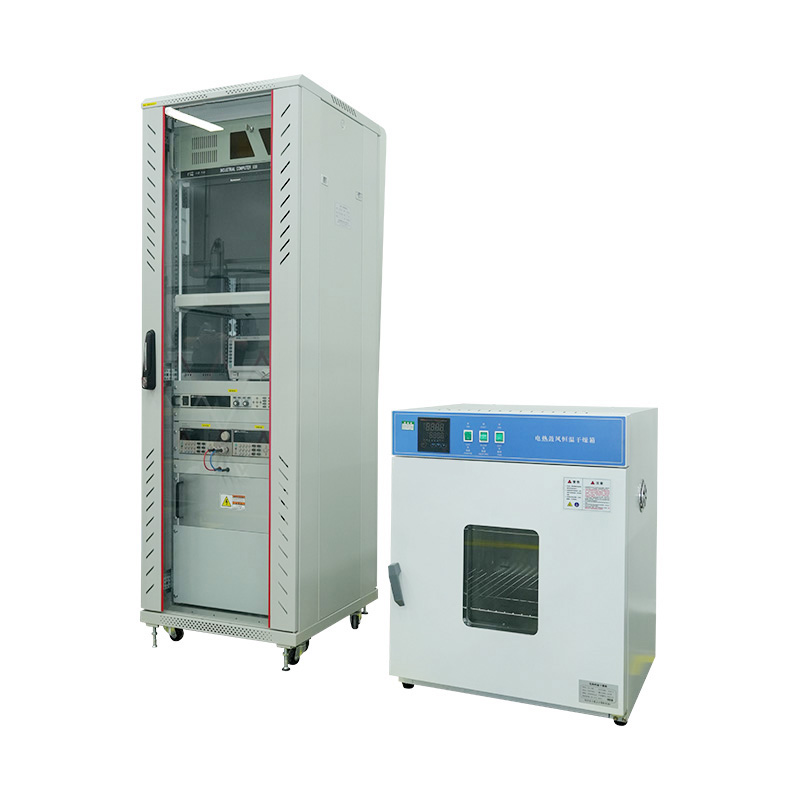
The primary purpose of a temperature and humidity test chamber is to simulate a wide range of environmental conditions to evaluate how a product, material, or component will perform over time when exposed to specific climates. This form of reliability testing methods is crucial for identifying potential failures, such as material degradation, corrosion, electrical malfunction, or physical deformations, that could occur due to fluctuations in heat and moisture. By subjecting products to accelerated stress conditions—like cycling between extreme heat and cold or maintaining constant high humidity—manufacturers can predict product lifespan, verify compliance with international standards, and ultimately enhance product quality and customer satisfaction before mass production and market release.
Selecting the right environmental chamber requires a careful analysis of your specific testing requirements. Start by defining the key parameters of your tests, including the necessary temperature and humidity range, the rate of change between extremes, and the physical size and weight of your test samples. Consider the industry standards you need to comply with, as these will dictate specific performance criteria for the chamber. Other critical factors include the chamber's uniformity and stability specifications, available options for integrating additional stress factors like vibration, and the sophistication of the control and data logging software. For those looking to improve product durability, opting for a chamber that offers flexibility for future test requirements is often a wise investment. Consulting with a qualified application engineer is highly recommended to ensure the selected chamber meets all current and anticipated needs.
The fundamental difference between benchtop and walk-in chambers lies in their size, capacity, and application. Benchtop chambers are compact units designed to sit on a laboratory workbench and are ideal for testing small components, PCBs, or small batches of materials. They offer a cost-effective solution for applications with limited space and less extreme parameter requirements. In contrast, walk-in chambers are large, room-sized installations designed to test entire products, large systems, or very high volumes of samples. They can simulate much broader environmental conditions and are essential for industries like automotive and aerospace where testing full-scale assemblies is necessary. The choice between the two depends entirely on the size of the test specimens and the scale of the testing operations.
Combined environmental testing, which involves applying multiple stresses (e.g., temperature, humidity, and vibration) simultaneously, offers significant benefits over testing each factor in isolation. The main advantage is that it provides a much more accurate and realistic simulation of real-world conditions. In actual use, products are rarely subjected to just one stressor at a time; for example, a car's electronic control unit experiences engine heat, road-induced vibration, and humidity from the atmosphere all at once. Testing these factors in combination can uncover failure mechanisms that would never appear in single-stress tests, leading to more robust and reliable product designs. This approach is a cornerstone of highly accelerated life testing (HALT) and highly accelerated stress screening (HASS), which are designed to quickly identify design weaknesses and manufacturing defects.




We value your suggestions and questions. If you have any questions about our products and services, please contact us. We will treat you responsibly and reply to your information as soon as possible.
 Building 14, Chuangjin Industrial Park, Zhitang Town, Changshu City, Suzhou City, Jiangsu, China
 +86-17712471297


 EN
EN
 English
 中文简体
中文简体