-
 [email protected]
-
 +86-17712471297
[email protected]
+86-17712471297

Content
In the rapidly evolving field of electrical safety, the hipot & insulation tester plays a critical role in ensuring equipment reliability and protecting personnel from electrical hazards. These devices are widely recognized for their ability to perform high-voltage testing, insulation resistance measurement, and leakage current evaluation, which are essential for both industrial and commercial applications. As industries such as manufacturing, energy, and electronics continue to expand, the demand for reliable electrical testing solutions has grown significantly.
The global market for hipot & insulation testers has witnessed steady growth, driven by increasing awareness of electrical safety regulations and technological advancements in testing equipment. Key products like hipot testers, electrical safety testers, and high voltage testers are now standard tools in quality assurance labs, maintenance facilities, and R&D centers. Emerging markets, particularly in Asia-Pacific, are showing remarkable adoption rates due to the rapid development of industrial automation and renewable energy sectors.
Global Hipot & Insulation Tester Market Overview
| Region | Market Share | Main Applications | Annual Growth Rate |
|---|---|---|---|
| North America | 30% | Industrial equipment, power systems | 6% |
| Europe | 25% | Automation, motors | 5.5% |
| Asia-Pacific | 35% | PV modules, electronics | 7% |
| Other Regions | 10% | General applications | 4% |
The primary functions of a hipot & insulation tester are designed to ensure electrical safety and equipment reliability. These devices conduct AC/DC hipot tests, insulation resistance testing, and leakage current measurement, which are crucial for detecting potential faults before they escalate into serious hazards. By evaluating the dielectric strength of electrical components, these testers help prevent equipment failure, electrical shocks, and fire risks in industrial and commercial settings.
Modern hipot & insulation testers are equipped with advanced features such as programmable voltage ranges, real-time data logging, and automatic test sequences. The AC/DC Insulation Resistance Tester for Motors and Transformers allows engineers to assess insulation quality under both alternating and direct current conditions, making it ideal for motor winding diagnostics and transformer maintenance. Additionally, portable devices have enabled field engineers to perform quick and accurate testing without the need for extensive setup, increasing efficiency in industrial inspections.
By integrating intelligent measurement algorithms and safety interlocks, these testers not only ensure compliance with international standards but also enhance operational efficiency. The combination of high-precision measurement and user-friendly interfaces makes hipot & insulation testers indispensable for electrical engineers, quality assurance teams, and R&D laboratories.
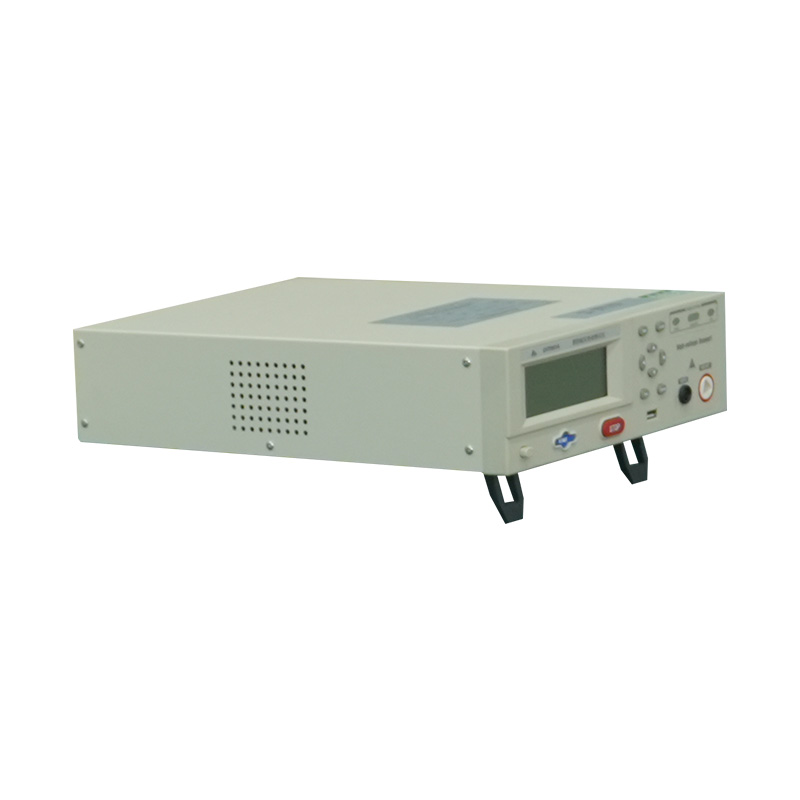
Hipot & Insulation Testers are available in a variety of types to meet different industrial, commercial, and laboratory needs. The main categories include portable testers, benchtop testers, and multi-function combined testers, each tailored for specific applications and environments.
Portable Hipot Testers are designed for field use, offering mobility and ease of operation. They are ideal for on-site equipment inspections, routine maintenance, and quick diagnostics, providing sufficient voltage ranges and insulation measurement capabilities for most industrial tasks.
Benchtop Testers offer higher precision and extended voltage ranges, making them suitable for laboratories, motor testing, and transformer maintenance. They are often integrated with data logging and automated test sequences for consistent and repeatable results.
Multi-Function Combined Testers represent the latest advancement in electrical safety testing, integrating hipot testing, insulation resistance measurement, leakage current evaluation, and sometimes even dielectric withstand testing in a single unit. These devices are particularly useful for research and development environments where comprehensive testing of electronic and electrical components is required.
Comparison of Hipot & Insulation Tester Types
| Type | Voltage Range | Accuracy | Typical Applications |
|---|---|---|---|
| Portable | 0~5kV | ±1% | Industrial maintenance |
| Benchtop | 0~10kV | ±0.5% | Motors, power systems |
| Multi-Function Combined | 0~15kV | ±0.2% | Laboratories, R&D |
This classification allows engineers and quality assurance teams to select the right tester based on application requirements, voltage levels, and desired measurement precision.
Hipot & insulation testers are widely applied across multiple industries to ensure electrical safety and compliance with standards. In industrial equipment maintenance, these testers are used to detect insulation degradation in motors, generators, and high-voltage machinery, preventing costly downtime and potential hazards. Portable devices allow field engineers to perform rapid on-site testing without interrupting production lines.
In the power and transformer sector, the use of AC/DC Insulation Resistance Testers for Motors and Transformers is critical. These devices assess winding insulation quality and leakage currents, ensuring that transformers, electric motors, and switchgear operate safely and efficiently. Regular testing helps avoid unexpected failures and extends equipment lifespan.
The renewable energy sector, especially photovoltaic (PV) modules, increasingly relies on Hipot & Insulation Test Equipment for PV Modules. These testers evaluate the insulation of solar panels and related electrical components, guaranteeing long-term performance and safety in harsh environmental conditions. Testing PV modules against dielectric withstand and leakage currents ensures reliability, compliance with industry standards, and prevents early failures caused by humidity, dust, or high-voltage stress.
Electronics manufacturing also benefits from these testers. Leakage current testers are used to verify the insulation integrity of consumer and industrial electronic devices before shipment, reducing product recalls and enhancing customer safety. By integrating precise measurement technology with automated testing, hipot & insulation testers provide consistent, reliable results across a wide range of applications.
The hipot & insulation tester industry is experiencing rapid technological advancements, driven by the demand for higher precision, safety, and operational efficiency. One of the most notable trends is smart and automated testing. Modern testers are increasingly equipped with programmable voltage profiles, automatic test sequences, and real-time data logging, reducing manual errors and increasing throughput in industrial and laboratory environments.
Portable insulation testers have become more advanced, offering wireless connectivity and integration with software platforms for remote monitoring and analysis. Engineers can now perform field testing while automatically synchronizing results to a central database, allowing for real-time decision-making and predictive maintenance.
Another major innovation is the development of high-resolution leakage current testers and enhanced dielectric withstand testing capabilities. These improvements allow detection of subtle insulation degradation that could lead to failures in sensitive electronic equipment or high-voltage systems.
Additionally, the combination of hipot & insulation testers with AI-driven diagnostic tools is opening new possibilities for predictive analysis and preventive maintenance. By analyzing historical test data, these systems can identify patterns indicating potential insulation failures, enabling proactive interventions that save time, reduce costs, and enhance safety.
Compliance with international standards is a critical aspect of hipot & insulation tester applications. These standards ensure that electrical equipment meets safety requirements, minimizes risk of electric shock, and maintains operational reliability. Commonly referenced standards include IEC 61010, UL 1012, and IEC 60950, which provide guidelines for high-voltage testing, insulation resistance measurement, and leakage current limits.
For manufacturers and testing laboratories, adhering to these standards is not optional—it is essential for product certification and market acceptance. hipot & insulation testers are often designed to meet or exceed these regulatory requirements, ensuring safe and accurate testing across different applications, from industrial machinery to consumer electronics.
Comparison of Key Electrical Safety Standards
| Standard | Test Type | Voltage Level | Applicable Equipment |
|---|---|---|---|
| IEC 61010 | Hipot & Insulation | ≤5kV | Laboratory instruments |
| UL 1012 | Leakage Current | ≤10kV | Industrial power supplies |
| IEC 60950 | Dielectric Withstand | ≤3kV | IT equipment and electronics |
Understanding and following these standards ensures that testing procedures are consistent, reliable, and legally compliant. It also helps engineers select the appropriate hipot & insulation tester for specific applications, minimizing risk and enhancing product safety.
The hipot & insulation tester market is highly competitive, with a growing number of manufacturers developing innovative solutions to meet diverse industry needs. While specific brand names are not the focus, it is evident that companies investing in high-precision measurement, smart features, and user-friendly interfaces gain a competitive advantage.
Global demand for Hipot test equipment and electrical insulation testing solutions is increasing, particularly in sectors such as industrial automation, renewable energy, and electronics manufacturing. Suppliers who can provide versatile devices that combine portability, multifunctionality, and compliance with international standards are well-positioned to capture market share.
Emerging trends include the integration of data analytics and remote monitoring into testing devices. This enables engineers to track equipment health over time, predict potential failures, and optimize maintenance schedules. Additionally, the adoption of portable and multi-function testers is helping small- and medium-sized enterprises access high-quality testing capabilities without the need for large laboratory setups.
Selecting the right hipot & insulation tester is essential for ensuring accurate measurements, compliance with safety standards, and operational efficiency. When choosing a tester, several key factors should be considered, including the required voltage range, measurement accuracy, portability, and the specific application scenario.
For industrial maintenance, a portable tester with a voltage range of up to 5kV and ±1% accuracy is typically sufficient. For testing motors and transformers, a benchtop tester with a broader voltage range and higher precision is recommended. In laboratory or research settings, a multi-function combined tester that supports high-voltage testing, insulation resistance measurement, leakage current evaluation, and dielectric withstand testing is ideal.
Hipot & Insulation Tester Selection Guide
| Application Scenario | Recommended Type | Voltage Range | Accuracy |
|---|---|---|---|
| Industrial equipment maintenance | Portable | 0~5kV | ±1% |
| Motors and transformer testing | Benchtop | 0~10kV | ±0.5% |
| Laboratory and R&D | Multi-function Combined | 0~15kV | ±0.2% |
The future of the hipot & insulation tester industry is closely tied to technological innovation and the increasing emphasis on electrical safety across all sectors. As industrial automation, renewable energy, and smart electronics continue to expand, the demand for advanced testing equipment is expected to grow steadily.
Emerging trends such as AI-driven predictive diagnostics, remote monitoring, and cloud-based data analysis are transforming the way electrical testing is conducted. These innovations allow engineers to proactively identify potential insulation failures, reduce downtime, and optimize maintenance schedules. Portable and multi-function testers will continue to gain popularity, particularly in field applications and small-scale industrial operations.
In addition, stricter regulations and international standards are pushing manufacturers to develop devices with higher precision, enhanced safety features, and better usability. The integration of hipot & insulation testers into comprehensive electrical safety programs is likely to become standard practice, ensuring reliable performance and compliance.




We value your suggestions and questions. If you have any questions about our products and services, please contact us. We will treat you responsibly and reply to your information as soon as possible.
 Building 14, Chuangjin Industrial Park, Zhitang Town, Changshu City, Suzhou City, Jiangsu, China
 +86-17712471297


 EN
EN
 English
 中文简体
中文简体