-
 [email protected]
-
 +86-17712471297
[email protected]
+86-17712471297

Content
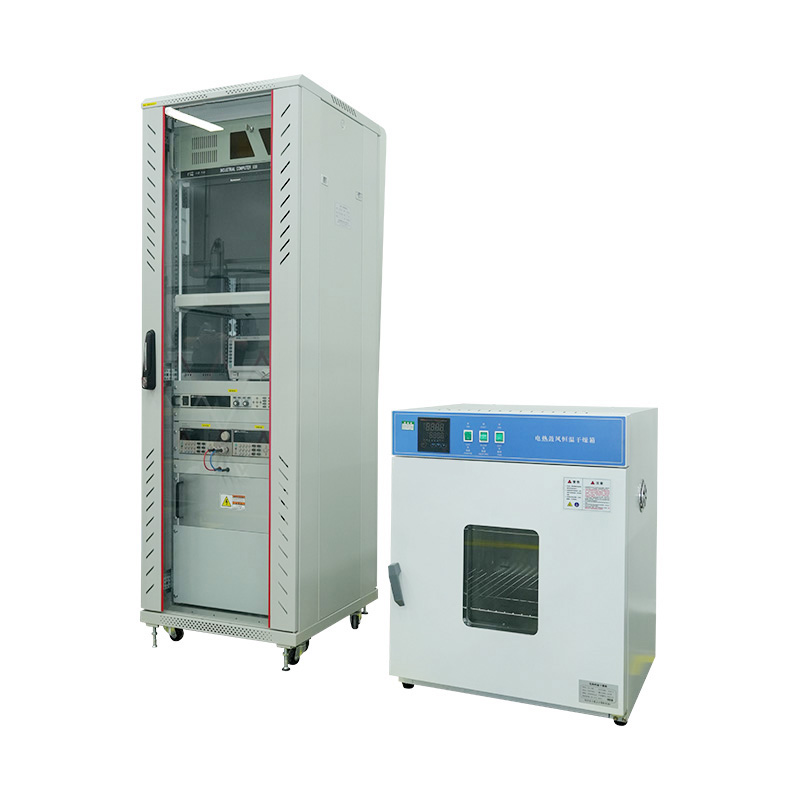
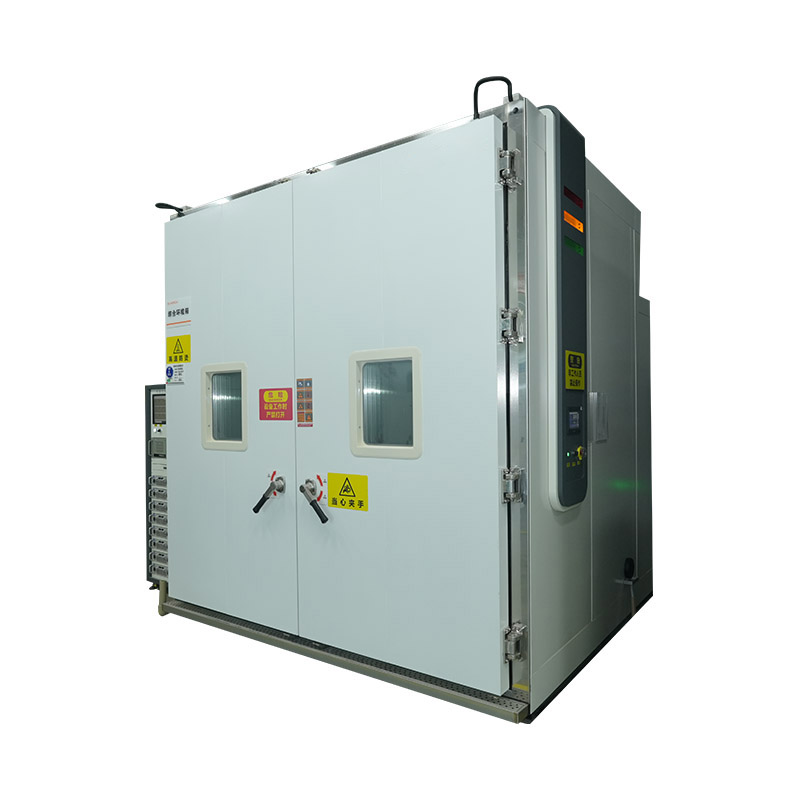
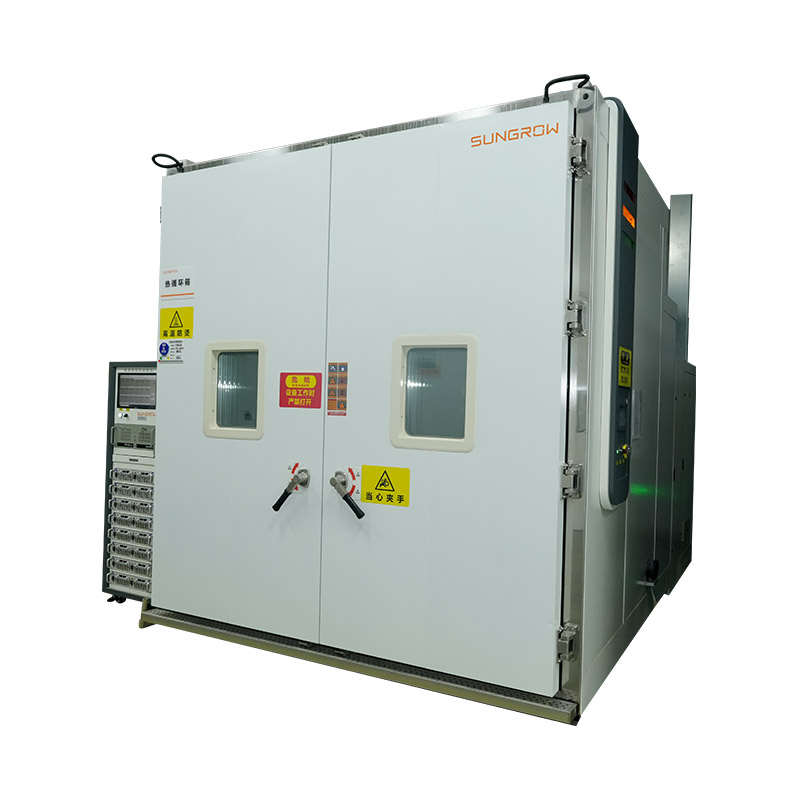
The concept of a controlled environment is paramount in scientific research and industrial quality assurance. At the heart of this concept lies the Steady-State Test Chamber, a sophisticated apparatus designed to create and maintain a precisely defined set of environmental conditions over an extended period. Unlike dynamic chambers that simulate rapid changes, the primary objective of a steady-state chamber is to achieve and hold a constant "steady state" of parameters such as temperature, humidity, light intensity, or pressure. This stability is not merely about reaching a setpoint; it is about maintaining that setpoint with minimal fluctuation, ensuring that the item under test is subjected to a uniform and repeatable environment. This allows researchers and engineers to isolate the effects of specific environmental factors on materials, components, or complete products, from semiconductors and photovoltaic panels to pharmaceuticals and automotive parts. The data derived from such testing is critical for validating product durability, predicting service life, ensuring regulatory compliance, and driving innovation in material science. Companies like Shanghai Houyao Testing Equipment Co., Ltd., with their focus on advanced environmental simulation, understand that the integrity of this steady-state condition is the bedrock of reliable and trustworthy test results, forming the basis for critical decisions in high-stakes industries.
A Steady-State Test Chamber is defined by its capability to control one or more environmental variables. The most common parameters are temperature and relative humidity, but the scope extends far beyond these.
The true engineering challenge lies not in achieving these setpoints, but in maintaining them uniformly throughout the test volume while compensating for thermal loads from the test specimen itself, ensuring there are no gradients or hotspots that could skew results.
Two performance metrics are non-negotiable for a credible Steady-State Test Chamber: uniformity and stability. Uniformity refers to the spatial consistency of the parameter (e.g., temperature) across the entire workspace at a single point in time. Stability, often called temporal stability, refers to the consistency of the parameter at a specific location over time. For instance, a chamber might claim a temperature stability of ±0.5°C. This means that once stabilized, the temperature at the sensor will not drift more than 0.5°C above or below the setpoint over a defined period, regardless of external room temperature variations or the thermal mass of the test item. High-performance chambers, such as those developed by specialists like Shanghai Houyao Testing Equipment Co., Ltd., incorporate advanced control algorithms, multi-zone airflow management, and high-quality sensor systems to excel in these metrics. This ensures that a test conducted in Shanghai is directly comparable to a test conducted elsewhere, a principle essential for global supply chains and international standards certification.
The applications of Steady-State Test Chambers span across virtually every modern industry where product reliability and material performance are critical. These chambers provide the foundational data for understanding how products will behave in their intended end-use environments, which are often complex and demanding.
In the renewable energy sector, the performance and longevity of photovoltaic (PV) modules are paramount. Steady-state solar simulation testing is the industry-standard method for determining a PV module's power output (Pmax), efficiency, and current-voltage (I-V) characteristics under controlled, repeatable "standard test conditions" (STC: 1000 W/m² irradiance, 25°C cell temperature, AM1.5 spectrum). A specialized steady-state sunlight simulation chamber holds irradiance and spectrum constant, allowing for precise measurement without the variability of natural sunlight. Beyond performance testing, chambers also conduct steady-state damp heat testing for photovoltaic modules, a critical reliability assessment. This involves subjecting modules to a constant high temperature and high humidity (e.g., 85°C, 85% RH for 1000 hours) to accelerate potential failure modes like delamination, corrosion, or insulation degradation. This test is a key part of qualification sequences like IEC 61215 and IEC 61730. Manufacturers like Shanghai Houyao Testing Equipment Co., Ltd. have developed dedicated 2000W and 4000W photovoltaic UV and sunlight simulation systems to address these precise needs, helping to fill industry gaps with composite optical and environmental simulation products that ensure panels can withstand decades of outdoor exposure.
The automotive industry relies heavily on steady-state testing to validate everything from interior materials to complex electronic control units (ECUs). How to perform a steady-state thermal cycling test on electronic components is a fundamental question for automotive engineers. Unlike a simple on/off cycle, a steady-state approach involves ramping the component to a target temperature (e.g., 125°C for under-hood electronics) and holding it there for a sufficient duration (soak time) for the entire unit to reach thermal equilibrium. This is followed by a ramp-down and soak at a cold temperature (e.g., -40°C). The steady-state soak is crucial because it ensures the thermal stress is fully applied throughout the component's mass, revealing weaknesses in solder joints, interfaces, and materials that rapid transitions might miss. The following table contrasts steady-state thermal cycling with simpler on/off cycling:
| Test Characteristic | Steady-State Thermal Cycling | Basic On/Off Cycling |
|---|---|---|
| Primary Objective | Induce thermomechanical fatigue by ensuring the entire unit experiences the full temperature extreme. | Check basic operational functionality after temperature change. |
| Soak Time | Extended, based on time-to-stabilization of the unit under test. | Minimal or nonexistent. |
| Stress Applied | High, due to complete thermal saturation. | Low to moderate, as internal components may not reach setpoint. |
| Failure Modes Uncovered | Solder joint cracking, delamination, cohesive material failures. | Gross functional failures, connection issues. |
| Applicable Standards | IEC 60068-2-14, AEC-Q100, rigorous automotive OEM specifications. | Basic environmental screening tests. |
Furthermore, steady-state temperature and humidity testing for aerospace composites methodologies are increasingly adopted in automotive for carbon-fiber and polymer composites, assessing long-term property changes under constant hot/wet conditions.
In biopharmaceuticals, product stability is directly tied to efficacy and patient safety. Stability test chambers that maintain steady-state conditions of temperature and humidity are legally mandated for determining the shelf life of drugs and biological products. These studies, guided by ICH Q1A guidelines, require long-term storage (e.g., 25°C ± 2°C / 60% RH ± 5% RH for 12+ months) and accelerated storage (e.g., 40°C ± 2°C / 75% RH ± 5% RH for 6 months) under unwavering conditions. Any deviation can invalidate months of costly research. Similarly, chambers are used for steady-state temperature and humidity testing for aerospace composites and other advanced materials used in medical devices and implants, ensuring they do not degrade in sterilization or during long-term implantation in the human body's stable, yet demanding, 37°C, high-humidity environment.
Choosing and operating a Steady-State Test Chamber is a significant investment that requires careful consideration of technical specifications, future testing needs, and operational protocols.
The internal architecture of a chamber is what dictates its performance. Key features to evaluate include:
Features like independent overtemperature protection, compressor delay timers, and alarms for sensor failure or door ajar are essential for protecting both the chamber and valuable test specimens during unattended long-duration tests common in steady-state damp heat testing for photovoltaic modules.

Navigating the procurement process requires a methodical approach. Begin by meticulously defining your test requirements, referencing the specific standards you must comply with (e.g., MIL-STD, IEC, JIS, ISO). Create a detailed specification document covering the following:
Engaging with an experienced manufacturer early in this process is invaluable. A company like Shanghai Houyao Testing Equipment Co., Ltd., with its team of 47 technical personnel specializing in large-scale environmental simulation, can provide critical guidance on tailoring a chamber to your specific application, whether it's for aerospace, automotive electronics, or photovoltaics, ensuring the final product fully complies with internationally recognized premium standards.
Owning a precision chamber is only half the battle; proper operation and maintenance are key to data integrity. Best practices include:
Adherence to these practices transforms the chamber from a simple appliance into a traceable, reliable measurement instrument, a principle deeply ingrained in the service philosophy of dedicated suppliers in the testing industry.
The field of environmental simulation is not static. As products become more complex and testing standards more stringent, steady-state testing technology continues to evolve, pushing the boundaries of control, integration, and realism.
The frontier of testing lies in applying multiple steady-state stresses simultaneously in a controlled manner to better simulate real-world conditions. This goes beyond simple temperature-humidity. Advanced chambers now integrate steady-state light exposure with thermal and humidity control, vital for testing materials like plastics, coatings, and textiles for outdoor use. Similarly, steady-state temperature and humidity testing for aerospace composites is often combined with controlled UV exposure or mechanical loading (stress) within the same chamber to study synergistic degradation effects. Another critical advancement is the combination of steady-state low pressure (altitude) with temperature. For example, an aerospace component may need to be tested at a constant -55°C while simultaneously being held at a steady pressure equivalent to 50,000 feet altitude. These standards for steady-state low-pressure test chamber calibration are exceptionally rigorous, requiring specialized equipment and expertise. Manufacturers filling such niche demands, like Shanghai Houyao with its independently developed low-pressure test chambers and composite simulation products, are enabling these next-generation validation protocols.
The credibility of any test rests on the traceable calibration of the equipment. For Steady-State Test Chambers, this involves a hierarchy of measurements. The chamber's own sensors are calibrated against transfer standards (e.g., a reference PRT and hygrometer), which are in turn calibrated by a national metrology institute. Specific standards govern these procedures. For instance, standards for steady-state low-pressure test chamber calibration may reference ASTM E2931 or internal aerospace OEM specifications, which dictate the number of measurement points, stabilization criteria, and data analysis methods. Similarly, the calibration of a sunlight simulator's steady-state irradiance follows ASTM E927 or IEC 60904-9. Compliance with these standards is not optional for reputable testing facilities; it is the foundation of quality assurance and a key reason why industries from biopharmaceuticals to photovoltaics seek out equipment that fully complies with internationally recognized premium standards.
The modern Steady-State Test Chamber is becoming an intelligent node in the Industrial Internet of Things (IIoT). Advanced control systems now feature:
This digital transformation, coupled with a relentless pursuit of precision in uniformity and stability, ensures that the Steady-State Test Chamber will remain an indispensable tool for quality, innovation, and safety across the globe's most technologically advanced industries.




We value your suggestions and questions. If you have any questions about our products and services, please contact us. We will treat you responsibly and reply to your information as soon as possible.
 Building 14, Chuangjin Industrial Park, Zhitang Town, Changshu City, Suzhou City, Jiangsu, China
 +86-17712471297


 EN
EN
 English
 中文简体
中文简体