-
 [email protected]
-
 +86-17712471297
[email protected]
+86-17712471297

In the demanding world of material science and product development, ensuring longevity and reliability under environmental stress is paramount. Traditional single-factor testing often falls short of predicting real-world performance, where materials face a complex cocktail of degrading elements. This is where the UV and damp heat combined stress tester becomes an indispensable tool. By simultaneously exposing materials to controlled ultraviolet radiation and high humidity at elevated temperatures, this advanced apparatus accelerates the aging process in a way that closely mimics harsh outdoor or demanding indoor environments. The core benefit lies in its ability to provide a more accurate, faster, and comprehensive assessment of a material's durability, colorfastness, and mechanical integrity. For industries ranging from automotive and construction to coatings and textiles, investing in this testing methodology translates to reduced failure rates, enhanced product quality, and stronger customer trust. This article delves deep into the multifaceted advantages of employing a combined stress approach, exploring how it surpasses sequential testing and delivers actionable insights that drive innovation and compliance.
Content
The fundamental superiority of a UV and damp heat combined stress tester stems from its ability to replicate synergistic degradation effects. In nature, sunlight (UV), rain, dew (damp heat), and heat rarely act in isolation. UV radiation breaks down chemical bonds and fades colors, while moisture in the form of high humidity or condensation can lead to hydrolysis, swelling, and corrosion. When these factors are applied together, they often create a compounded effect. For instance, UV degradation can make a polymer surface more porous and susceptible to moisture ingress, which in turn can accelerate hydrolytic breakdown and lead to catastrophic failure much faster than if each stressor were applied sequentially. The chamber of a combined tester precisely controls irradiance (often with UVA-340 lamps to simulate sunlight's critical short wavelength), temperature (typically from 40°C to 80°C or higher), and relative humidity (often 20% to 98% RH). This controlled yet aggressive environment compresses years of outdoor exposure into weeks or months of laboratory testing. The data generated is not just about failure points; it reveals the interaction mechanisms between different stressors, providing a depth of understanding that is critical for formulating more robust materials and protective coatings.
The application of UV and damp heat combined stress testing spans virtually any industry where material performance under environmental duress is a concern. It is a cornerstone of quality assurance and research. In the automotive industry, it's used to test exterior paints, plastics, dashboards, seals, and headlights for fading, cracking, and loss of mechanical properties. The building and construction sector relies on it for evaluating siding materials, window profiles, roofing membranes, and sealants. For coatings and paints manufacturers, it's essential for developing products that retain gloss, color, and protective capabilities. The textile and outdoor gear industry uses it to ensure fabrics, webbings, and dyes withstand prolonged sun and rain exposure. Furthermore, it is critical in electronics for testing the durability of enclosures and external components, and in photovoltaics for assessing solar panel backsheets and encapsulants. The tester's versatility in simulating everything from desert heat with UV to tropical rainforest conditions makes it a universal tool for global market compliance.
A common question in material testing is why not simply run a UV test followed by a damp heat test? The answer lies in the fundamental difference between sequential and simultaneous stress application. Sequential testing applies one stressor at a time, allowing the material to potentially recover or undergo different chemical pathways between cycles. This often leads to an underestimation of degradation rates. Simultaneous testing in a UV and damp heat combined stress tester creates a state of constant, compounded attack. The moisture present during UV exposure can quench free radicals or create new reaction pathways, leading to failure modes that never appear in sequential tests. For example, a coating might pass 1000 hours of UV followed by 500 hours of damp heat but fail catastastically after only 600 hours of combined exposure. This makes the combined tester not just a time-saver, but a necessity for uncovering critical, real-world failure mechanisms. The following table contrasts the two methodologies.
| Testing Aspect | Combined Stress Testing | Sequential Testing |
| Stress Application | UV, heat, and humidity applied simultaneously. | UV, heat, and humidity applied in separate, consecutive cycles. |
| Real-World Accuracy | High. Closely mimics natural synergistic degradation. | Lower. Misses interaction effects between stressors. |
| Test Duration | Shorter overall, as synergistic effects accelerate aging. | Longer overall, as cycles are added and effects are less severe. |
| Failure Mode Detection | Uncovers unique, synergistic failure modes (e.g., micro-cracking from hydrolysis during UV exposure). | May only show failures characteristic of the dominant single stressor. |
| Cost & Efficiency | Higher initial investment in equipment, but lower long-term testing time and more reliable results. | Lower equipment cost potentially, but longer testing times and risk of inaccurate pass/fail conclusions. |
Effectively interpreting data from a UV and damp heat combined stress tester is crucial for turning raw numbers into actionable engineering intelligence. The evaluation is multi-faceted, involving both quantitative measurements and qualitative observations. Standard procedure involves periodic removal of samples for assessment against control specimens. Key performance indicators include color change (ΔE) measured by a spectrophotometer, gloss retention measured by a glossmeter, and mechanical property changes (tensile strength, elongation at break) tested on universal testing machines. Visual inspection under magnification is critical for spotting micro-cracks, blistering, chalking, or mold growth. For how to test plastic durability with UV and humidity, one would specifically track the yellowness index and impact strength. Advanced analysis might involve FTIR spectroscopy to detect chemical structure changes or SEM imaging to examine surface morphology. The goal is to establish a performance baseline and define failure criteria (e.g., ΔE > 5, or 50% loss of tensile strength) that correlate with end-use requirements, allowing for clear material selection or formulation improvement decisions.
To maximize the value of a UV and damp heat combined stress tester, test parameters must be carefully tailored to the specific material and its intended service environment. A "one-size-fits-all" approach can lead to irrelevant or overly severe results. The first step is defining the real-world conditions the material will face—is it for Arizona desert sun, Florida humidity, or European temperate climate? Standards like ISO 4892-3, ASTM G154, and SAE J2527 provide foundational cycles, but they often need customization. Key parameters to optimize include: the spectral power distribution of the UV source (UVA-340 for general sunlight, UVB-313 for more severe), the irradiance level (e.g., 0.83 W/m² at 340nm), temperature during UV exposure (typically 50-70°C), condensation or dark cycle temperature and humidity (often 40-50°C at 100% RH), and the duration of each cycle. For instance, best practices for UV damp heat testing cycles might involve alternating between 8 hours of UV at 70°C and 4 hours of condensation at 50°C. The art lies in accelerating degradation without introducing unrealistic failure mechanisms.
Investing in a UV and damp heat combined stress tester represents a significant capital expenditure for a laboratory. However, a thorough cost-benefit analysis almost universally shows a strong return on investment (ROI) for organizations conducting regular material qualification. The primary cost savings come from reduced time-to-market. By identifying material weaknesses early in the R&D phase, companies avoid costly field failures, recalls, and warranty claims. The tester enables faster iteration of formulations, allowing engineers to "fail fast and learn fast." Secondly, it reduces liability risk by providing robust data that a product will perform as advertised in its intended environment. This is crucial for compliance with international standards and for winning contracts, especially in automotive, aerospace, and construction. Furthermore, owning the testing capability in-house reduces dependency on external test houses, lowering per-test costs and protecting intellectual property. When calculating ROI, consider not just the machine price, but the value of accelerated development cycles, risk mitigation, and enhanced competitive advantage through superior product durability.
Intangible Value:
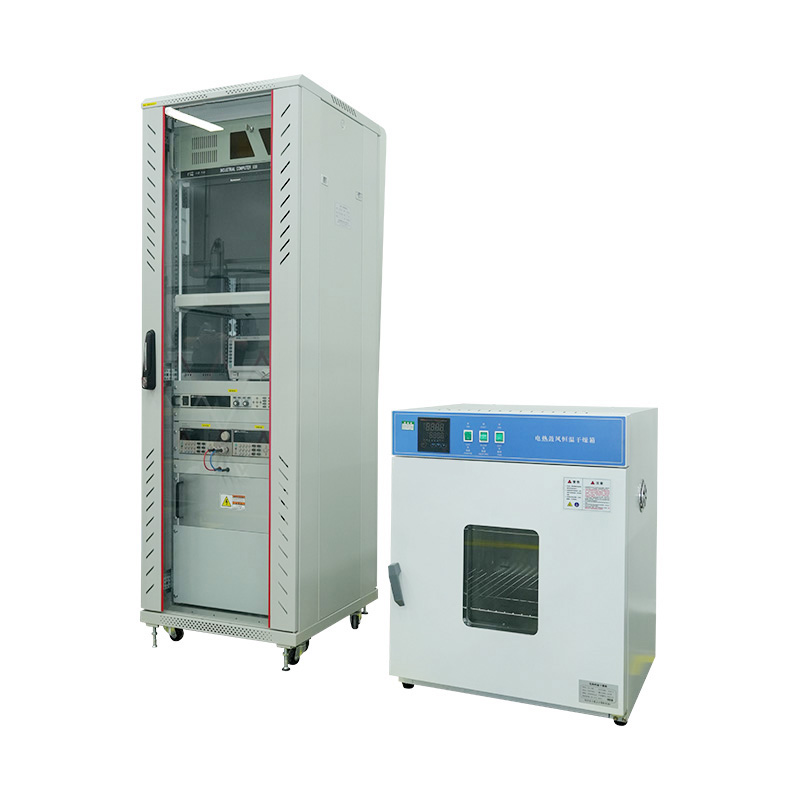
A standard UV test chamber primarily focuses on simulating the effects of ultraviolet light, often with some temperature control. Its main function is to cause photodegradation—fading, chalking, and loss of gloss. A UV and damp heat combined stress tester is a more advanced and comprehensive apparatus. It integrates precise control over UV irradiance, temperature, and relative humidity (or condensation) within the same chamber and test cycle. The key difference is the simultaneous application of these stressors. This allows it to replicate the synergistic effects of sunlight plus moisture, which is responsible for most real-world material failures like hydrolysis, blistering, and loss of mechanical properties. While a UV chamber answers "how does it fade?", a combined tester answers "how does it weather and ultimately fail in a humid, sunny environment?"
There is no single "typical" duration, as test length is dictated by material type, application, and the specific performance standards being met. However, accelerated tests in a UV and damp heat combined stress tester are designed to compress years of exposure into a much shorter time. Common test durations range from 500 to 3000 hours. For example, a basic qualification test for an automotive interior plastic might be 1000 hours, while testing for a 10-year outdoor warranty on a building profile might require 2500+ hours. The time is also dependent on the chosen cycle severity. Tests following established standards like ASTM G154 or ISO 4892 often specify minimum durations. It's crucial to understand that the goal is not just to run for a set time, but to continue until a specific performance criterion (e.g., 50% gloss retention) is met or failed, or to compare the relative durability of several materials under identical conditions.
A UV and damp heat combined stress tester is exceptionally good at providing comparative data and accelerated failure modes, but predicting an exact service life in years is complex and requires careful correlation. The tester can definitively show that Material A performs significantly better than Material B under the same accelerated conditions. To translate test hours into years of expected service, a correlation must be established between the accelerated test protocol and real-world exposure data from the same material class in a specific geographic location. This often involves placing sample racks in Florida, Arizona, or other benchmark outdoor sites and comparing the degradation to lab results. With this correlation factor (e.g., "1000 hours in our chamber approximates 2 years in Florida"), reasonably accurate predictions can be made. Therefore, while it doesn't give a standalone calendar date, it is the most reliable laboratory tool for estimating and ranking outdoor durability.
Many industries have rigorous standards that effectively mandate the use of combined environmental stress testing to ensure product safety, reliability, and longevity. The automotive industry is a prime example, with standards like SAE J2527 (accelerated exposure of automotive exterior materials) and various OEM-specific specifications that require simultaneous UV, heat, and moisture cycles. The building and construction industry relies on standards such as AAMA 624.2 for fenestration and ASTM D7869 for roofing, which specify combined weathering. The photovoltaic industry uses IEC 61215 and IEC 61730, which include critical "Damp Heat" and "UV Preconditioning" sequences that are often performed in combined chambers. Additionally, the coatings industry (ASTM D6695), plastics (ISO 4892), and military/aerospace (MIL-STD-810) all reference or require testing under combined environmental factors to simulate real-world aging.
The UV and damp heat combined stress tester is particularly effective at uncovering failure modes that single-factor tests miss. The most common include: Color Fading and Chalking: Caused primarily by UV photodegradation of pigments and polymers. Loss of Gloss: UV and moisture attack on the surface resin, leading to microscopic cracking and roughness. Blistering and Delamination: Primarily a moisture-driven failure where water vapor penetrates and lifts coatings or layers apart, often accelerated by heat. Micro-cracking: A synergistic failure where UV embrittlement creates micro-fissures that are propagated by thermal cycling and penetrated by moisture. Hydrolysis: The chemical breakdown of polymers (like polyesters or nylons) by reaction with water, greatly accelerated at the high temperatures inside the chamber. Loss of Mechanical Properties: A critical failure where tensile strength, elongation, or impact resistance plummets due to chain scission from UV and hydrolysis, often without dramatic visual changes, making it a key metric to measure. Identifying these modes early is the primary benefit of the test.




We value your suggestions and questions. If you have any questions about our products and services, please contact us. We will treat you responsibly and reply to your information as soon as possible.
 Building 14, Chuangjin Industrial Park, Zhitang Town, Changshu City, Suzhou City, Jiangsu, China
 +86-17712471297


 EN
EN
 English
 中文简体
中文简体