-
 [email protected]
-
 +86-17712471297
[email protected]
+86-17712471297

In the demanding fields of product reliability testing and material science, replicating the sun's intense and variable energy is a critical challenge. A solar irradiance test chamber with temperature control is the cornerstone technology for this purpose. This sophisticated equipment allows researchers and engineers to simulate solar radiation and thermal conditions with precision, accelerating aging processes and validating product performance under controlled, repeatable conditions. This guide delves deep into the functionality, applications, and selection criteria for these vital instruments, offering specific and actionable insights for professionals across industries.
Content
At its core, a solar irradiance test chamber is designed to simulate the spectral power distribution of natural sunlight. When integrated with precise temperature control, it creates a comprehensive environmental simulator capable of testing photovoltaic (PV) module efficiency, material durability, and component reliability.
The versatility of a solar irradiance test chamber with temperature control makes it indispensable across multiple high-tech sectors.
Choosing the right chamber requires balancing technical specifications, standards compliance, and operational needs. Below is a detailed comparison of key factors.
While a larger full-vehicle sunlight simulation chamber is necessary for testing complete car interiors or large aerospace components, it presents a greater challenge in achieving perfect spectral match and uniformity compared to a smaller bench-top unit designed for PV cell testing. Larger chambers require sophisticated optical engineering and multiple lamp arrays to maintain performance across the entire test area.
| Feature | Large Chamber (e.g., for full vehicle) | Small Chamber (e.g., for samples) |
|---|---|---|
| Primary Advantage | Tests full-scale products | Superior spectral accuracy & uniformity |
| Complexity | Higher (multiple lamps, complex cooling) | Lower |
| Ideal For | Final integration testing | R&D, material screening, component tests |
The debate often centers on Xenon Arc versus LED sources. Xenon lamps offer the best full-spectrum simulation, which is crucial for tests like accelerated weathering tests for solar panels that require authentic UV stress. LED systems, while more energy-efficient and longer-lasting, may struggle to replicate the full solar spectrum perfectly but excel in programmable, narrow-band testing.
| Aspect | Xenon Arc Lamp | LED Array |
|---|---|---|
| Spectral Match | Excellent (UV-Vis-IR) | Good (customizable, but may lack full IR) |
| Lifetime | ~1,500 - 2,000 hours | 50,000+ hours |
| Operational Cost | Higher (lamp replacement, power, cooling) | Lower |
| Best For | Standards-compliant weathering, PV testing | Specific stress tests, cycling efficiency |
The required temperature profile is dictated by the test standard. A chamber used for thermal cycling test for PV modules might need a range from -40°C to +85°C or beyond, with rapid transition rates. In contrast, a chamber focused on sunlight simulation for automotive interior testing might prioritize high-temperature stability up to 120°C to simulate parked car conditions. Control precision of ±1.0°C or better is typically required for certified testing.
Ensuring your chamber can perform tests according to recognized standards is non-negotiable for credible results. Key standards include:
A chamber designed for IEC standard compliance solar simulator chambers will have documented validation reports proving it meets the stringent Class A or B criteria for spectral performance.
As testing demands grow more complex, standard chambers may not suffice. This has led to the development of advanced composite environmental testing with solar simulation systems. These integrated solutions combine solar irradiance with other stressors like rain, salt spray, high humidity, or low pressure in a single test sequence.
For instance, Shanghai Houyao Testing Equipment Co., Ltd., leveraging its expertise since 2012, has innovated in this very area. The company's development of composite UV and composite sunlight simulation chambers directly addresses these complex testing needs. By integrating multiple environmental factors, these chambers can more accurately and rapidly simulate real-world conditions, such as the combined effect of intense sunlight, high temperature, and humidity on an outdoor energy storage system or an aircraft component. This approach fills a significant industry gap, allowing for more efficient and predictive reliability testing.
The future points towards greater intelligence, efficiency, and specificity. Chambers are increasingly incorporating AI for predictive maintenance and optimizing test cycles. The use of more tunable, narrow-band light sources like LEDs will enable highly targeted material stress tests. Furthermore, the demand for low cost solar simulator for material testing is driving innovation in compact, benchtop designs that offer robust performance for specific R&D applications without the footprint and cost of full-scale systems. This trend makes advanced solar simulation accessible to a broader range of laboratories and companies.
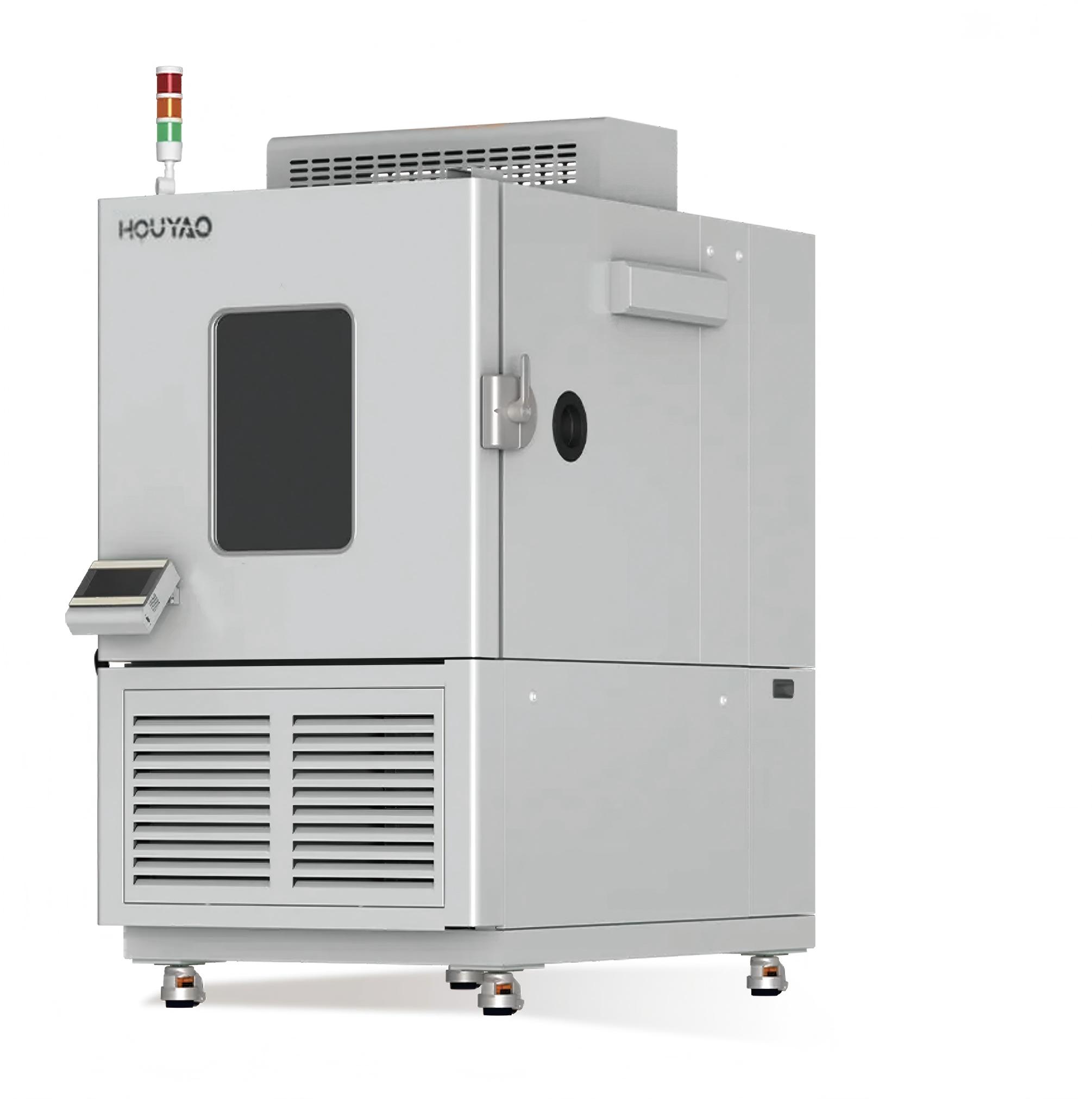
Selecting and utilizing a solar irradiance test chamber with temperature control is a strategic decision that directly impacts product quality, safety, and time-to-market. From ensuring a full-vehicle sunlight simulation chamber meets automotive standards to configuring a system for precise accelerated weathering tests for solar panels, the technical considerations are profound. By understanding the components, applications, and selection criteria—including the importance of IEC standard compliance solar simulator chambers and the emerging potential of composite environmental testing with solar simulation—organizations can make informed investments. Whether for high-volume validation or specialized R&D, including the search for a low cost solar simulator for material testing, the right chamber is a powerful tool for innovation and reliability assurance in our sun-driven world.
A standard UV chamber primarily emits ultraviolet radiation to test polymer degradation. A solar simulator (or solar irradiance test chamber) replicates the full spectrum of sunlight, including visible and infrared light, and is typically paired with precise temperature control. This allows for more realistic testing of phenomena like photovoltaic conversion efficiency and total solar thermal loading, which a UV-only chamber cannot achieve.
Xenon arc lamps generally have a usable lifetime of approximately 1,500 to 2,000 hours of operation. After this period, their spectral output can drift outside acceptable limits for standards-compliant testing. Regular calibration and monitoring are essential, and lamps should be replaced according to the manufacturer's schedule or when validation checks fail.
Technically possible, but not optimal. Testing PV modules to IEC standards requires a Class A or B spectral match and specific irradiance uniformity. Automotive material testing (e.g., to SAE J2412) may prioritize higher temperatures and different filter configurations. While a high-quality, versatile chamber can be reconfigured, dedicated chambers or specialized models like composite sunlight simulators are often used for efficiency and to avoid cross-contamination of test conditions.
Temperature is a primary accelerant in material degradation. The combined effect of light (photon energy) and heat (thermal energy) drives most chemical and physical aging processes. Precise temperature control allows for:
According to the IEC 60904-9 standard, a solar simulator is classified (Class A, B, or C) based on its performance in three areas: spectral match, spatial non-uniformity, and temporal instability. A "Class A" rating in spectral match means the light output across six specified wavelength bands is within 25% of the ideal reference sunlight spectrum (e.g., AM1.5G). It signifies the highest fidelity in replicating the sun's light, which is crucial for accurate and legally defensible test data in applications like PV certification [1].
[1] International Electrotechnical Commission. (2020).IEC 60904-9: Photovoltaic devices - Part 9: Classification of solar simulator characteristics.Geneva, Switzerland: IEC.
[2] International Electrotechnical Commission. (2021).IEC 61215-1: Terrestrial photovoltaic (PV) modules - Design qualification and type approval - Part 1: Test requirements.Geneva, Switzerland: IEC.
[3] International Organization for Standardization. (2013).ISO 4892-2: Plastics — Methods of exposure to laboratory light sources — Part 2: Xenon-arc lamps.Geneva, Switzerland: ISO.

We value your suggestions and questions. If you have any questions about our products and services, please contact us. We will treat you responsibly and reply to your information as soon as possible.
 Building 14, Chuangjin Industrial Park, Zhitang Town, Changshu City, Suzhou City, Jiangsu, China
 +86-17712471297


 EN
EN
 English
 中文简体
中文简体