-
 [email protected]
-
 +86-17712471297
[email protected]
+86-17712471297

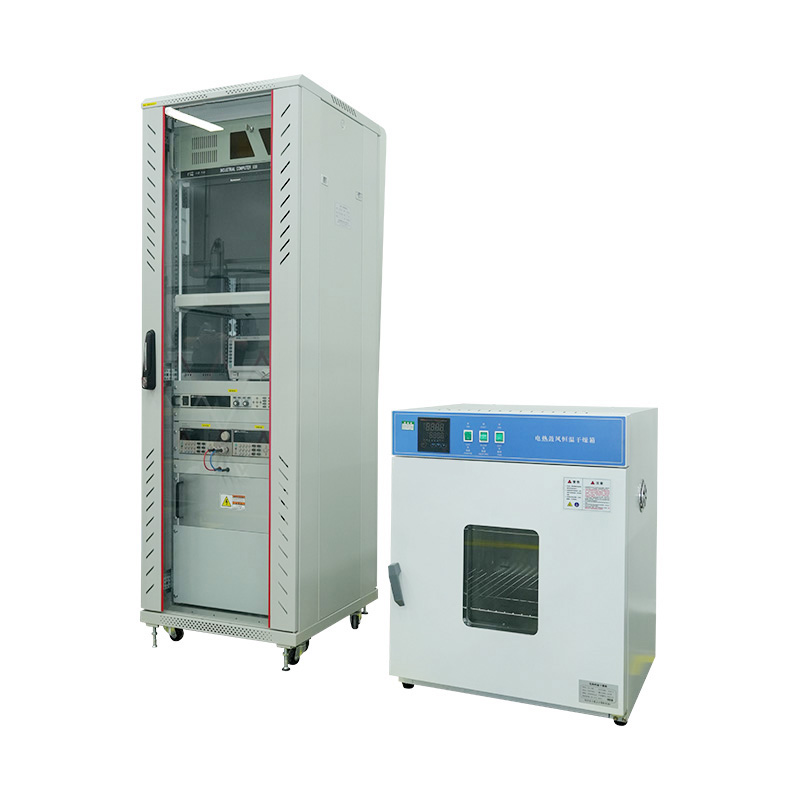
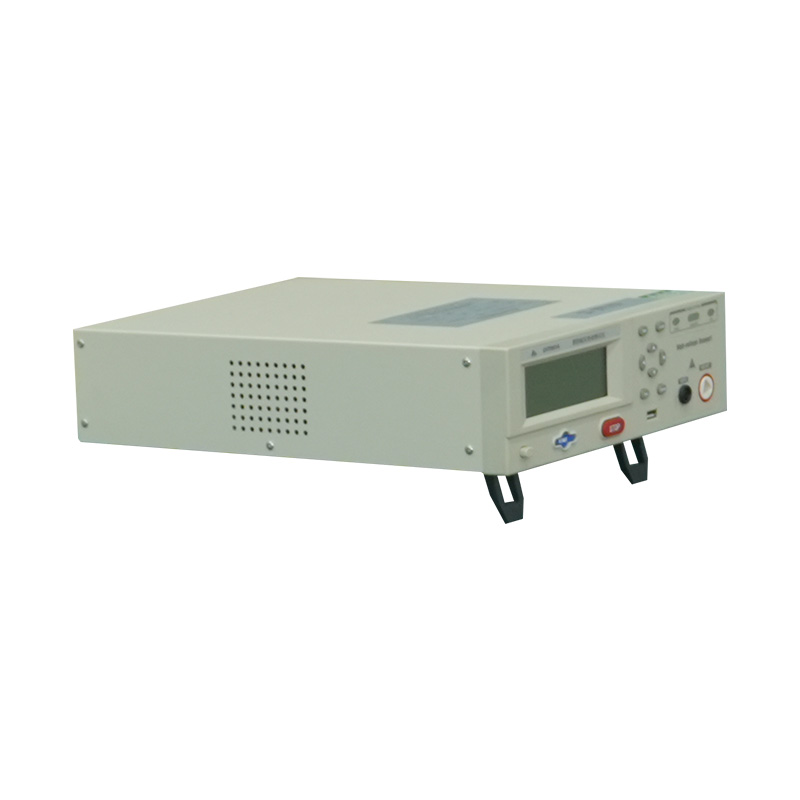
An IV curve tester for solar panels is a specialized diagnostic instrument that measures the current-voltage relationship of photovoltaic modules to evaluate performance, detect faults, and verify power output against manufacturer specifications. The device applies varying electrical loads across the full operating range from open-circuit voltage to short-circuit current, generating a characteristic curve that reveals critical parameters including maximum power point, fill factor, and efficiency. Modern portable IV curve testers support voltage ranges up to 1500V and current up to 45A, enabling testing of high-capacity modules and strings in utility-scale installations. Advanced models feature multi-channel simultaneous measurement of up to 20 strings, automatic fault diagnosis through AI-powered curve analysis, and compliance with IEC 62446-2 standards for comprehensive photovoltaic system inspection.
Content
The fundamental principle of IV curve testing involves sweeping an electrical load across a photovoltaic module or string while simultaneously recording current and voltage at each operating point. This sweep generates a two-dimensional plot with current on the vertical axis and voltage on the horizontal axis, creating the characteristic IV curve that defines solar cell behavior.
From the measured curve, the tester calculates essential performance metrics. Open-circuit voltage represents the maximum voltage when no current flows, typically ranging from 30 to 50 volts for standard modules and up to 1500 volts for high-voltage strings. Short-circuit current indicates maximum current output at zero voltage, varying with module size and irradiance. The maximum power point occurs where the product of current and voltage reaches its peak, defining the rated wattage of the module. Fill factor quantifies curve quality by comparing actual maximum power against the theoretical ideal, with values above 0.75 indicating healthy cells and lower values suggesting degradation or manufacturing defects.
Accurate IV curve testing requires simultaneous measurement of irradiance and cell temperature using reference cells and temperature sensors. The tester then normalizes measured data to Standard Test Conditions, defined as 1000 watts per square meter irradiance, 25 degrees Celsius cell temperature, and Air Mass 1.5 spectral distribution. Without proper environmental correction, curve interpretation becomes unreliable, potentially masking genuine system issues or falsely indicating underperformance. High-precision testers achieve voltage measurement accuracy of plus or minus 0.5 percent and current accuracy of plus or minus 0.5 percent, with conversion to STC maximum power accuracy better than plus or minus 5 percent.
Modern IV curve testers employ capacitive loads that enable rapid curve tracing with high-resolution sampling. Capacitive-based systems can capture up to 2200 data points per curve, revealing subtle anomalies that resistive load systems with 128 points might miss. This high-resolution sampling is critical for detecting bypass diode failures, which create characteristic voltage steps visible only with sufficient point density. The measurement time for a complete curve ranges from 2 to 500 milliseconds, allowing up to 6 curves per minute for rapid system assessment.
Selecting an appropriate IV curve tester requires understanding the voltage, current, and power ranges necessary for target applications. Modern photovoltaic systems increasingly utilize high-voltage architectures that demand corresponding tester capabilities.
Entry-level portable testers typically offer voltage ranges up to 1000V and current up to 10A, suitable for residential and small commercial systems. Professional-grade portable units extend to 1500V and 20A, accommodating modern high-voltage strings and large-format modules. The most advanced multi-channel systems support up to 1600V and 40A per channel, with some configurations offering 45A on request for testing high-capacity bifacial or PERC modules. Maximum power test ranges span from 50W for single-cell analysis to 30kW for complete array assessment.
Measurement accuracy directly impacts diagnostic confidence. Premium IV curve tracers achieve 0.5 percent accuracy at the maximum power point, with less than 3 percent total uncertainty under standard measurement conditions. Four-point measurement configurations eliminate voltage drop errors in cabling. Sampling rates reach 66 kilosamples per second for voltage-current pairs, with parallel sampling of all four channels including irradiance and temperature. The maximum number of measuring quadruples per curve can reach 8192 points, providing exceptional detail for fault signature analysis.
Field-ready IV curve testers must operate across challenging environmental conditions. Operating temperature ranges typically span minus 10 degrees Celsius to plus 50 degrees Celsius, with storage from minus 20 to plus 60 degrees Celsius. IP65 ratings ensure dust and water jet protection for outdoor use. Wireless sensor communication extends up to 2 kilometers for large installations, while 100-meter wireless connections between host and probe simplify rooftop testing. Battery life for portable units reaches 8 hours of continuous operation, supported by high-capacity lithium-ion modules.
| Specification | Entry-Level Portable | Professional Portable | Multi-Channel System |
|---|---|---|---|
| Voltage Range | Up to 1000V | 15 to 1500V | Up to 1600V |
| Current Range | Up to 10A | 0.5 to 20A | Up to 40A |
| Power Range | Up to 10kW | 50W to 30kW | Up to 30kW per channel |
| Measurement Accuracy | Plus or minus 1% | Plus or minus 0.5% | Plus or minus 0.5% |
| Data Points per Curve | 128 to 400 | Up to 2048 | Up to 2200 |
| Channels | 1 | 1 | Up to 20 simultaneous |
| Test Time per String | 10 to 20 seconds | 10 seconds | 2 minutes for 20 strings |
IV curve analysis is the only diagnostic method capable of detecting mismatch losses and certain electrical faults that thermal imaging and visual inspection cannot identify. The shape, slope, and transitions of the curve provide electrical signatures that reveal specific fault conditions.
Potential-Induced Degradation develops gradually through voltage stress between modules and grounding systems, reducing output power by 5 to 10 percent annually. Early detection is challenging because degradation occurs uniformly across modules, eliminating comparative reference points. IV curve shape analysis identifies PID through characteristic slope changes indicating simultaneous series resistance decrease in the maximum power region and shunt resistance decrease in the low-voltage region. This electrical confirmation occurs before visual inspection reveals any module discoloration, enabling timely implementation of regeneration protocols while performance remains recoverable.
Hotspots develop when reverse-biased cells dissipate power as heat, creating fire risks and accelerating degradation. Thermal imaging requires irradiance exceeding 1100 watts per square meter for reliable detection, restricting inspections to midday periods during clear weather. IV curve analysis identifies hotspot conditions through electrical signatures rather than thermal symptoms, enabling detection at irradiance levels above 300 watts per square meter. The characteristic curve distortion of reduced current with maintained voltage reveals cells operating in reverse breakdown regardless of whether sufficient heat generation has developed for thermal camera detection.
Bypass diode failures occur in two distinct modes requiring different remediation strategies. Shorted diodes permanently bypass cell groups, reducing string voltage. Open failures eliminate bypass protection, forcing shaded cells into reverse breakdown with excessive heating. High-resolution IV curve measurement with 2200-point sampling captures the voltage transitions that distinguish these modes. Shorted diodes create characteristic voltage steps visible as distinct plateaus, with the voltage reduction corresponding precisely to the bypassed cell group count. This quantification enables immediate identification of specific junction box locations rather than requiring module-by-module investigation across entire strings.
Mismatch losses occur when modules within a string have different power outputs due to manufacturing variation, soiling patterns, or degradation rates. These losses are 10 to 100 times higher than individual defective panels and are invisible to thermal imaging. Multi-channel IV curve tracers measure up to 20 strings simultaneously under identical environmental conditions, exposing mismatch effects through comparative curve analysis. Performance losses exceeding 10 percent within 3 years are common in unmaintained systems, making mismatch detection critical for long-term asset management.
IV curve testing must adhere to established international standards to ensure measurement consistency, comparability, and legal defensibility for warranty claims and performance guarantees.
IEC 62446-1 defines minimum requirements for system documentation, commissioning tests, and inspection of grid-connected photovoltaic systems. Category 2 within this standard specifies detailed electrical testing including IV curve measurement for systems requiring comprehensive verification. IEC 62446-2 extends these requirements to periodic maintenance and fault diagnosis, establishing protocols for ongoing performance assessment. Testers compliant with these standards provide traceable measurement chains and standardized reporting formats accepted by insurers, financiers, and regulatory bodies.
IEC 61215 governs design qualification and type approval for crystalline silicon terrestrial photovoltaic modules, while IEC 61646 applies to thin-film modules. These standards define the test sequences and acceptance criteria that factory flash testers must apply during production. IV curve testers used for pre-shipment inspection should reference these standards when comparing measured performance against manufacturer datasheets. The standard power tolerance accepted by buyers is typically plus 3 percent minus 0 percent relative to nominal maximum power rating, meaning a 400W module must measure between 400W and 412W.
IEC 60904-1 establishes procedures for measuring current-voltage characteristics of photovoltaic devices, while IEC 60891 provides temperature and irradiance correction methods for IV measured characteristics. Accurate application of these correction procedures is essential when field measurements deviate from Standard Test Conditions. Testers with integrated correction algorithms and comprehensive module databases covering most manufacturer products automatically apply appropriate coefficients, reducing operator error and ensuring consistent results.
The practical value of IV curve testers manifests in field deployment scenarios where speed, accuracy, and diagnostic depth directly impact maintenance costs and energy revenue.
Single-channel IV tracing systems require sequential measurement of individual strings, consuming days for inspection of solar farms with 400 strings per 3 megawatts. Multi-channel systems measure up to 20 strings simultaneously with time-synchronization technology, reducing inspection time to approximately 4 hours per megawatt. This efficiency gain translates directly to reduced labor costs, minimized system downtime, and more frequent monitoring intervals that catch degradation before significant revenue loss occurs.
Modern IV curve testers integrate with SCADA systems, PV monitoring platforms, and cloud-based analytics through RS485, Modbus, Wi-Fi, and Ethernet connections. Mobile applications enable remote device control, real-time data access, and automated report generation. Data export formats including CSV, PDF, and Excel support audit trails and compliance reporting. Some systems synchronize with dedicated servers for post-processing, intercomparisons, and cross-checking of data for fault diagnosis across multiple plants.
High-voltage photovoltaic systems present significant electrical hazards. Quality IV curve testers include built-in arc fault detection, automatic shut-off during electrical anomalies, and high-voltage isolation designs that protect operators during live testing. Four-wire measurement configurations separate current-carrying and sensing leads, eliminating voltage drop errors while reducing shock risk. Overvoltage and overcurrent protection circuits prevent equipment damage if connected to systems exceeding rated limits.
Choosing an appropriate IV curve tester requires matching technical capabilities to actual system characteristics and operational requirements rather than selecting based on price alone.
For residential and small commercial systems with string voltages below 1000V, entry-level portable testers provide adequate capability at moderate cost. For utility-scale installations utilizing 1500V DC architectures, professional-grade portables or multi-channel systems are mandatory. Consider whether testing will focus on commissioning, periodic maintenance, or troubleshooting, as each application demands different features. Commissioning requires high accuracy for warranty documentation, while maintenance benefits from speed and automated diagnostics. Troubleshooting demands high-resolution curve capture to identify subtle fault signatures.
Evaluate total cost of ownership over a 5-year lifecycle, including calibration services, firmware updates, software licenses, and training. Prioritize suppliers offering 12-month warranties with on-site repair support, traceable calibration certificates, and multilingual technical assistance. The investment in a quality IV curve tester returns value through extended system lifespan, optimized energy production, and reduced maintenance expenditure across the photovoltaic asset portfolio.


We value your suggestions and questions. If you have any questions about our products and services, please contact us. We will treat you responsibly and reply to your information as soon as possible.
 Building 14, Chuangjin Industrial Park, Zhitang Town, Changshu City, Suzhou City, Jiangsu, China
 +86-17712471297


 EN
EN
 English
 中文简体
中文简体